

Why Data Centre Infrastructure Matters for AI Development in the UK


29th January 2026
Artificial intelligence (AI) is transforming industries, but behind the scenes, data centres are doing the heavy lifting. While this presents a significant opportunity for developers, navigating the technical requirements, planning regulations, and the growing sustainability and cybersecurity obligations can be challenging.
Last year, we explored challenges in the UK’s data centre revolution, including net zero goals, water scarcity and the prioritisation of AI in the industrial strategy. This follow-up aims to demystify data centres: what they are, why they are so important, and the regulations shaping their development.
What is a data centre and why are they so important?
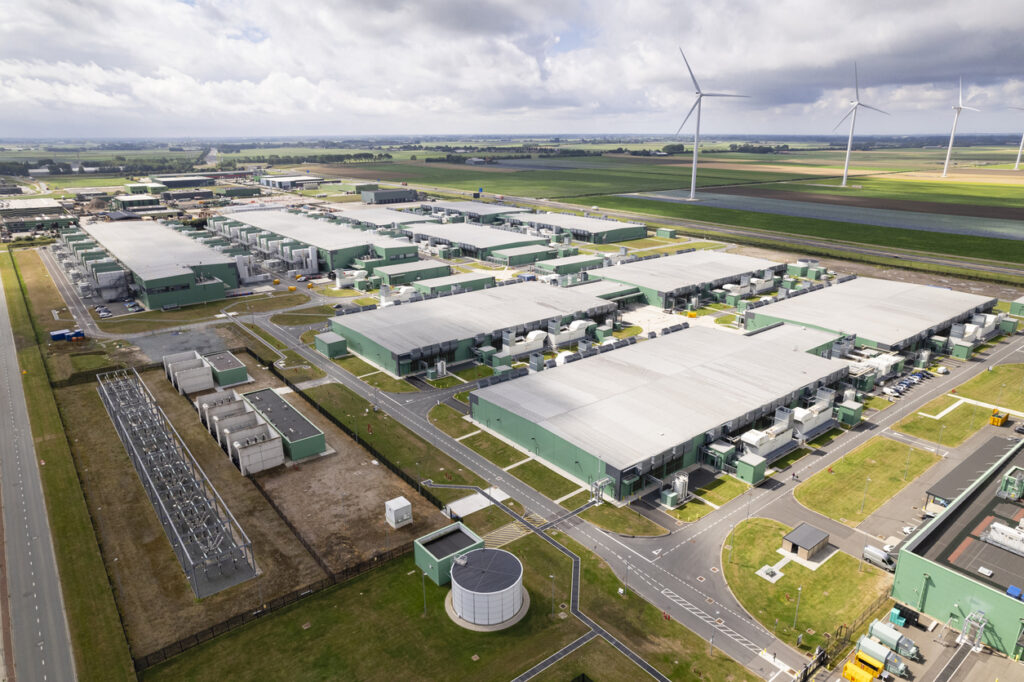
A data centre is a physical facility that stores, processes, manages and distributes large volumes of data. They provide secure infrastructure to store, process, and transmit data, which underpins essential digital services such as banking, healthcare and e-commerce. They are designated as critical national infrastructure (CNI), meaning they are considered crucial to the UK economy’s recovery from critical incidents such as cyberattacks and natural disasters.
Whilst data centres have been the backbone of digital infrastructure for many decades, demand for capacity has accelerated rapidly in recent years due to the growth of artificial intelligence (AI). In July 2025, the UK government set a target to achieve least 6GW of AI-capable data centre capacity by 2030, approximately a threefold increase on the current available capacity.
Why AI is driving demand for data centres
The development of AI is heavily reliant on data centres. Training and running of AI requires a vast amount of computational hardware, which is housed in these facilities, and data centres offer secure storage for the huge datasets used by AI models. Cloud-based services and connected AI models rely on data centres to ensure the time between a user’s input (like a spoken command or text) and the AI’s output or answer is fast to make interactions feel immediate and seamless.
Types of data centres
There are various data centres models, such as:
- Enterprise data centres – a single business storing data for internal use.
- Colocation centres – operated by third party service providers on behalf of their client(s).
- Edge and micro data centres – smaller facilities positioned closer to end users.
- Modular data centres – portable units for rapid deployment to meet specific or temporary capacity needs.
- Hyperscale data centres – large scale facilities designed to support extremely scalable cloud computing and big data workloads (often owned by major tech companies such as Amazon, Google, Microsoft).
An organisation’s choice as to which kind of data centre to use will depend on their needs in terms of scale, control, cost, and performance.
What does it take to build a data centre?
Despite the different data centre models outlined above, all data centres rely on the same technical infrastructure. Data centres require computing infrastructure to run applications and process data, storage infrastructure to hold vast amounts of data, and network infrastructure in order to connect the data centre with end users.
However, in addition to this technical infrastructure, there are a number of practical considerations to take into account:
- Power. Data centres need affordable and reliable power to operate all the necessary IT infrastructure. Developers should assess grid capacity early and explore renewable energy options to meet sustainability targets.
- Cooling. Data centres produce a lot of heat which must be removed from the IT infrastructure. This can be done using conventional heating, ventilation, and air conditioning (HVAC) systems, and/or other unconventional cooling technologies (such as liquid cooling, evaporative cooling, or AI-powered climate control). The excess data centre heat can be converted to district heating – i.e. a system of insulated pipes connecting the data centre with multiple buildings in the local area.
- Water. If opting for cooling technology that utilises water, developers should consider the data centre’s water requirements – and whether any environmental permits are required to draw water from rivers, lakes, or groundwater through boreholes.
- Security. The site (encompassing the data centre building itself and the plot of land as a whole) must include controlled access (i.e. employee badge access or video surveillance).
- Management. Building management systems assess temperature, humidity, power and cooling levels in real time, as well as security logging.
- Fibre. High-quality fibre connections ensure fast and reliable data transmission, supports scalability, reduces response times for data transfers, and is essential for maintaining performance across computing, storage, and network systems.
- Land and location. Data centre developers, when acquiring sites on which their data centres will be located, should consider if there is sufficient space for IT infrastructure, low physical risk (e.g., flood zones), political stability, and proximity to renewable energy sources. Latency considerations and international bandwidth capacity are also critical for global operations.
UK regulations shaping data centre development
Data centres have always been regulated in the UK, though historically this was through broader legislation rather than specific laws aimed directly at them. Examples include the following:
- Electricity at Work Regulations 1989 (governing the safety of power systems);
- Energy Performance of Buildings (England and Wales) Regulations 2012 (setting standards for energy efficiency and performance of cooling systems);
- Energy Saving Opportunities Scheme Regulations 2014 (requiring qualifying organisations to conduct comprehensive energy audits every four years to assess energy consumption and identify energy-saving opportunities).; and
- Energy Efficiency (Private Rented Property) (England and Wales) Regulations 2015 (requiring all commercial properties, including data centres, to maintain a minimum Energy Performance Certificate rating to avoid civil penalties).
However, with the growth of AI, additional regulations are being introduced to regulate data centres more directly.
Planning consent for land use
Currently, developers are required to consult with local planning authorities to determine whether planning permission is needed to use land for data centre development. However, the below initiatives are positioned to streamline this process.
Data Centres recognised as Critical National Infrastructure (CNI)
With data centres now recognised as CNI, local planning authorities are required to identify suitable sites for data centres in their local plans and must pay particular regard to the economic need for data centres and digital infrastructure.
Data Centres recognised as Nationally Significant Infrastructure Projects (NSIPs)
The Infrastructure Planning (Business or Commercial Projects) Regulations 2013 are set to be amended to provide that developers can “opt in” to the NSIP regime for certain data centres projects.
The NSIP regime will:
- Provide a streamlined planning process, with consent given by the Secretary of State, as opposed to the local authority, and a process which simultaneously addresses the acquisition of any land required via compulsory purchase.
- Offer data centre developers a greater degree of certainty and speed as it will likely be easier to get planning approval even where there is local opposition to the project.
The forthcoming National Policy Statement for data centres will likely establish the parameters and thresholds (such as size, capacity, strategic importance and environmental impact) to guide which data centre projects qualify for the NSIP scheme.
AI Growth Zones (AIGZs) program to accelerate development of data centres
On 13 January 2025, the UK government introduced AI Growth Zones, with the intention of accelerating the construction of AI data centres. In November 2025, the UK government published a policy paper entitled “Delivering AI Growth Zones” which set out the measures to be taken to expand data centre capacity in the UK.
Data centres in AI Growth Zones will benefit from accelerated grid connections, discounts on electricity costs and a streamlined planning process. The UK government also plans to invest in developing the AI skills of communities based in AI Growth Zones. The Government estimates that these reforms will unlock up to £100 billion of additional investment.
Four AI Growth Zones have been announced to date: South Wales, North Wales, North East and Oxfordshire. Applications to be an AI Growth Zone are now open indefinitely, with criteria covering technical feasibility, delivery feasibility, local impact and the level of government support requested.
Data Centres and Heat Networks
Data centres can feed waste heat into a local heat network or use it to heat adjacent buildings.The Energy Act 2023 introduces heat network zoning in designated zones, where certain types of buildings, such as new developments and large public/commercial buildings, will be required to connect to the network (though some exemptions are available).
Though not currently compulsory, data centres in such zones may soon likely be required to connect to heat networks where available. Even if a network is not yet available, new developments in a potential zone are encouraged to design their systems to be ready for future connection. Data centre developers should take this into account when deciding on the location of their data centre.
In addition, data centre developers may be signatories to the Climate Neutral Data Centre Pact, thus committingto becoming climate neutral by 2030 and exploring possibilities of excess heat recovery.
Data Centres and Grid Connection
The UK government has recognised that timely connection to the electricity grid poses one of the biggest problems to data centre projects, withdevelopers facing long delays for grid connection.
In 2025, Ofgem and the National Energy System Operator (NESO) introduced the Gate 2 framework to replace the previous “first come first served” system which allowed “zombie projects” to hold up grid capacity without progressing. These reforms aim to reduce grid connection delays and prioritise the use of renewable energy sources for those projects deemed “ready” for connection.
Data Centres and Emissions: UK Emissions Trading Scheme (UK ETS)
Data centres with combustion units that have a total net thermal input capacity equal to, or exceeding, 20 MWth must obtain greenhouse gas (GHG) permits and comply with the cap-and-trade system (which sets a cap on the total amount of GHGs that can be emitted and allows them to receive or buy emissions allowances that can be traded with other participants).
Data Centres and Carbon Reporting: Streamlined Energy and Carbon Reporting (SECR) rules
The SECR rules require large companies (meeting two of three criteria: >250 employees, >£36m turnover, or >£18m balance sheet) to report on the energy use, GHG emissions and energy efficiency actions.
Data Centres and Cybersecurity: Network and Information Systems Regulations 2018 (SI 2018/506)
Data centres that qualify as Operators of Essential Services (OES) or Relevant Digital Service Providers (RDSPs) must implement robust cyber and physical security measures. The Cyber Security Resilience (Network and Information) Bill (which is expected to be enacted in 2026) will bring data centres within the scope of the UK’s cybersecurity legislation.
The thresholds for qualifying data centres are defined by rated IT load (RITL), (i.e. the power supply to installed IT equipment during normal operation). The thresholds will be adjustable over time to reflect changes in technology, market dynamics and risk.
The current thresholds for data centres are as follows:
- 1 megawatt (MW) capacity or more for most commercial, multi-customer data centres.
- 10 MW capacity or more for enterprise data centres (i.e. those owned and operated by an organisation solely for its own business needs)
Data centres meeting the thresholds will be required to have appropriate and proportionate measures in place to manage risks and report incidents. This includes technical measures, such as pseudonymisation and encryption of data, network segregation, access controls, and environmental security, and operational measures, such as appropriate policies, staff training and disaster response and recovery plans.
What should developers do now?
The UK government’s commitment to becoming an AI leader presents a significant opportunity to develop data centres and commercialise on the country’s need for this infrastructure. However, whilst growing recognition of the importance of data centres is resulting in additional support for these developments, it is also leading to increased regulation.
For data centre developers, success hinges on strategic site selection, robust infrastructure planning, and compliance with evolving regulations. Early engagement with planning authorities and grid operators is essential, and selecting a site and project that aligns with the NSIP and AI Growth Zone schemes will significantly streamline the project.
A focus on energy efficiency and heat reuse will ensure long-term viability and alignment with national priorities. With the introduction of heat network zoning, consideration of heat reuse should be a central part of site selection and design, turning a compliance obligation into a potential revenue stream.
Finally, developers must build for the future, ensuring they can meet the high-density power and cooling demands of AI workloads and embedding robust cybersecurity measures. As the UK’s cybersecurity legislation expands to include data centres, demonstrating compliance with regulations will be essential for attracting top-tier clients and ensuring the long-term resilience of the facility.
We are here to help
At Shakespeare Martineau, our people in planning, construction, property, regulatory, technology and energy can support your data centre development every step of the way. We also collaborate with Marrons, a specialist design, planning and development consultancy, for additional expertise.
As a member of the Association of European Energy and Climate Lawyers (AEEC), we provide nuanced advice reflecting EU-connected markets and emerging trends.
If you need guidance or support on data centre development and compliance, please contact a member of our energy team.
This content is provided for general informational purposes only and does not constitute legal advice. It is not intended to address the circumstances of any individual or entity, nor should it be relied upon as a substitute for specific advice from a qualified solicitor. The information reflects the legal position as at the date specified and may be subject to change. If you require advice on a specific matter, please contact us directly.
Our latest energy content

Ofgem Review 2026: What the Proposed Reforms Mean for Energy Businesses
Gate 2 Connection Offer Deadlines Updated: What Ofgem’s Decision Means for Energy Projects
The CMA shows it is serious about regulating Green Claims
See more articles >
Ofgem Review 2026: What the Proposed Reforms Mean for Energy Businesses
ESG In 2026: How AI Regulation, Sustainability Reporting and Greenwashing Risk Affect UK Businesses
The Global Litigator | AI and the Law: Global Developments and What They Mean for Professional Services Teams
See more articles >

Our legal experts are here to answer any question you might have
If you’d like to speak to a member of our team, please fill out the form and we’ll be in touch within two hours.
If you know who you need to contact, you will find a full list of our people with email and telephone numbers here.
Call Us: 0330 024 0333
About the Authors

Charlotte Cassells
Senior Associate

Gabriella Norton
Solicitor

Freya Whiteside
Trainee Solicitor