

Lost At Sea, Presumed Dead… And Back Again: What the Odyssey Can Teach Us About Trusts and Estates Disputes

15th September 2026
Most contentious probate disputes begin with a fairly fundamental assumption: somebody has died.
Homer’s Odyssey is more complicated.
Odysseus leaves Ithaca to fight in the Trojan War and does not return for twenty years. Ten years are spent at war. Another ten are spent trying, with varying degrees of success, to get home.
Back in Ithaca, his wife Penelope and son Telemachus face an increasingly difficult question.
Is Odysseus dead?
Or is he still out there somewhere?
The distinction matters. More than 100 suitors have descended on his household hoping to marry Penelope. They consume his food, drink his wine, slaughter his livestock and generally behave as though the owner of the estate will never return.
Unfortunately for them, he does.
Homer probably did not intend the Odyssey to be read as a case study in contentious trusts and estates law. Yet at the heart of the story lies a surprisingly modern legal problem:
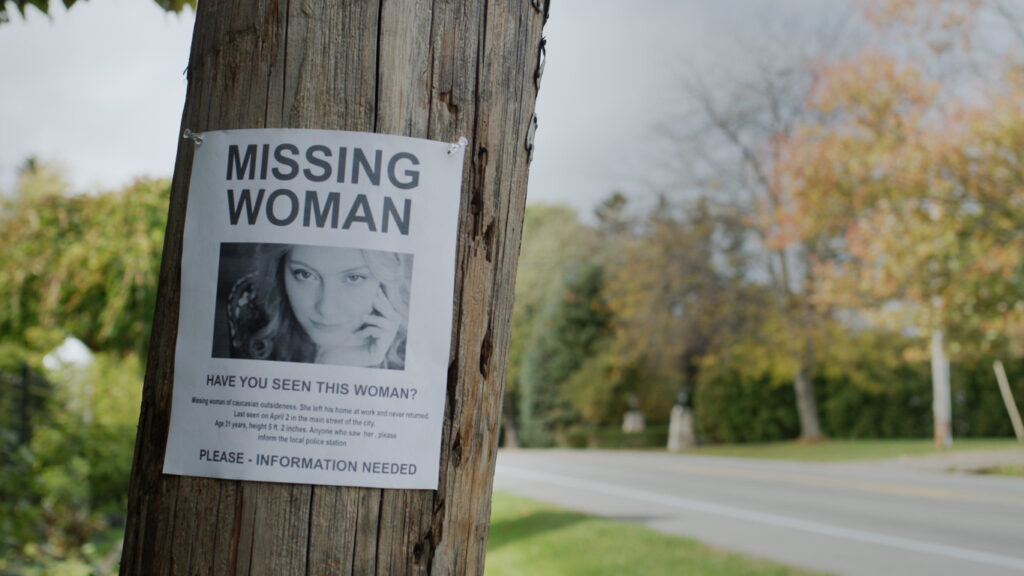
What happens when someone disappears for years, nobody knows whether they are alive or dead, and life must somehow continue without them?
Whilst Odysseus’ journey may seem far removed from modern legal practice, his story raises issues that many families, charities and trustees still face today when a person disappears and uncertainty surrounds property, succession and decision-making.
For families dealing with a missing relative, the question is not merely academic.
There may be a home to maintain, bank accounts to access, business interests to manage and inheritance rights that depend entirely upon whether the missing person is still living.
The law of England and Wales has developed mechanisms to deal with exactly those problems.
At Shakespeare Martineau, we regularly advise families, executors and beneficiaries facing uncertainty surrounding estates, succession and the administration of property. Whilst not many matters involve a Homeric hero attempting to return from the Trojan War, disputes arising from missing persons, family expectations and the management of assets during periods of uncertainty are very much modern-day issues.
The Odyssey helps explain why.
When someone disappears: the legal challenge
Missing does not necessarily mean dead
If Odysseus disappeared from England and Wales today, Penelope could not simply decide that enough time had passed and begin administering his estate.
The modern starting point would be the Presumption of Death Act 2013.
Under section 1, certain individuals, including a spouse, civil partner, parent, child, sibling or any other person with sufficient interest, may apply to the High Court for a declaration that a missing person is presumed dead.
Under section 2, the court must make such a declaration if it is satisfied either that the missing person has died, or that they have not been known to be alive for a period of at least seven years.
That distinction is important.
There is a common misconception that a person must always have been missing for seven years before they can be legally presumed dead. That is not the case. Where sufficient evidence exists that the person has died, a declaration may be made without waiting for seven years to pass.
The seven-year period simply provides an alternative route where a person has disappeared and has not been known to be alive.
Odysseus, having been absent for twenty years, would comfortably satisfy that requirement.
Although evidence that he had recently escaped a Cyclops or was residing on Calypso’s island might complicate matters.
What would Penelope actually have to do?
The reality is rather less dramatic than Homer suggests.
Proceedings under the Presumption of Death Act 2013 are governed by Part 57 of the Civil Procedure Rules and Practice Direction 57B. A claim for a declaration of presumed death must be issued in the High Court using the Part 8 procedure and must contain, or be accompanied by, information about the missing person and the circumstances surrounding their disappearance.
There are also specific requirements regarding notification of relatives and other parties who may have an interest in the application. In addition, there is an advertisement requirement. Under CPR 57.21, notice of the claim must be published in at least one newspaper circulating in the vicinity of the missing person’s last known address.
Accordingly, before Penelope could begin dealing with the legal consequences of Odysseus’ presumed death, considerably more evidence and procedure would be required than simply pointing out that nobody had seen him since the Trojan War.
That degree of caution is understandable. A declaration that somebody is presumed dead carries significant legal consequences, not only for their family but also for the ownership and administration of their property and assets.
Because this is not only about whether Odysseus is alive
For trusts and estates practitioners, this is where the issues become particularly interesting.
A declaration under the Presumption of Death Act 2013 is effective for all purposes, including in relation to rights and interests in property. As a result, the question is not simply whether a missing person is alive or dead. There are often significant practical and financial consequences arising from that uncertainty.
Families cannot necessarily leave a missing person’s affairs untouched indefinitely. There may be a family home to maintain, bank accounts to access, investments to manage, or business interests requiring ongoing attention. A spouse’s financial affairs may be closely intertwined with those of the missing person, and inheritance rights may ultimately depend upon whether that person is deemed to have died.
In Odysseus’ case, the assets are admittedly more picturesque: a palace, livestock, land and an apparently inexhaustible supply of wine for the suitors. The underlying issue, however, is one that remains entirely familiar today.
At some point, somebody needs legal authority to deal with the property.
Before death: another option
Presuming someone dead is not the only solution available to modern families.
The Guardianship (Missing Persons) Act 2017 introduced a separate regime enabling the court to appoint a guardian to manage some or all of a missing person’s property and financial affairs.
This distinction is important because the issue facing a family is not always whether a loved one can be presumed dead. In many cases, the immediate concern is far more practical: there may be bills to pay, property to maintain, investments to manage or business interests requiring ongoing attention, despite uncertainty as to whether the missing person is alive.
The guardianship regime allows the court to address those practical difficulties without requiring families to establish that the missing person has died. It therefore provides an alternative solution where the priority is the management of financial affairs rather than resolving the question of death.
For families today, this can be an invaluable mechanism for dealing with property, finances and business interests during what is often an extremely distressing period of uncertainty.
For Penelope, it might have proved particularly useful.
Property, inheritance and asset management issues
So who gets Ithaca?
Suppose a declaration of presumed death is eventually obtained.
The next question sounds remarkably like the start of a modern probate instruction: did Odysseus leave a will?
Homer does not tell us.
Had Odysseus executed a will in modern England and Wales, its terms would ordinarily determine how his estate should be distributed. However, if the validity of that will were challenged, a number of familiar contentious probate issues might arise.
For example, was the will executed in accordance with section 9 of the Wills Act 1837? Did Odysseus have testamentary capacity when he made it? If capacity were in dispute, the principles established in Banks v Goodfellow would become relevant. Questions might also arise as to whether he knew and approved the contents of the will, or whether undue influence had played a part in its preparation.
Equally, the dispute may not concern the validity of the will at all. In many contentious probate matters, the real issue is that a will produces an outcome which certain family members regard as unfair or unexpected.
That distinction is important. A surprising will is not necessarily an invalid one, and a disappointed expectation does not automatically translate into a legal entitlement.
From a modern estate planning perspective, Odysseus’ situation also highlights the importance of proper succession planning. Whilst no legal document can eliminate every potential dispute, a carefully drafted will and clear succession arrangements can significantly reduce uncertainty for those left behind and help minimise the scope for future conflict.
The suitors are eating the estate
Then there are the suitors.
From Telemachus’ perspective, they are depleting his father’s wealth in real time. Whilst the facts may be extreme, the underlying issue will sound familiar to many practitioners dealing with estate administration disputes.
Questions often arise about assets after death such as:
- Jewellery is missing.
- Money was transferred shortly before death.
- A family member has collected rent from an estate property.
- An individual claims that a valuable item was gifted to them years before.
- Someone continues treating estate assets as though they belong to them personally.
Personal representatives are not merely responsible for distributing whatever remains. They must identify, collect and administer the estate properly.
That often involves investigating what happened to assets and determining whether property should form part of the estate.
The suitors’ decision to spend years consuming another person’s livestock may be an unusually blatant example.
But the question remains entirely modern:
What belongs to the estate and where has it gone?
And then Odysseus comes home
Imagine that Penelope has done everything correctly. Odysseus has not been known to be alive for more than seven years, an application has been made to the High Court, and a declaration is granted that he is presumed dead. His affairs are dealt with on that basis and the legal consequences follow.
Years later, however, a rather weather-beaten traveller appears at the front door.
The Presumption of Death Act 2013 expressly anticipates that possibility. Section 5 allows an application for a variation order, including an order varying or revoking a declaration of presumed death where new evidence comes to light.
At first glance, the solution may seem straightforward. If Odysseus is alive, surely the declaration should simply be revoked and everything returned to him.
In reality, the position is more complicated. The law cannot necessarily rewind the intervening years as though nothing happened. Property may have been distributed, money may have been spent, and third parties may have acquired interests in reliance upon a valid declaration made by the High Court. Family members may also have organised their lives around the assumption that Odysseus had died.
The 2013 Act therefore includes provisions dealing with the property consequences of a variation order. This creates perhaps the most interesting tension in our Odyssey hypothetical. Odysseus has done nothing wrong by being alive, but Penelope, Telemachus and others involved in administering his affairs may also have done nothing wrong in relying upon a valid court order.
The law must find a way to accommodate both realities.
Surviving the Cyclops, Circe, the Sirens, Scylla, Charybdis and countless shipwrecks may therefore not be the end of Odysseus’ difficulties. He may still have needed legal advice when he finally arrived home.
“But Dad promised me Ithaca”
Of course, this is a contentious estates article, so we should probably make Odysseus’ family affairs a little more complicated.
Suppose that before leaving for Troy, Odysseus repeatedly tells Telemachus:
“Look after Ithaca while I am gone. One day, all of this will be yours.”
Telemachus relies upon those assurances. He devotes his life to managing the family property and structures his future around the expectation that he will eventually inherit it.
Twenty years later, Odysseus returns and changes his mind.
At this point, we move away from presumed death and into another area familiar to contentious trusts and estates practitioners: proprietary estoppel.
In Guest v Guest [2022] UKSC 27, the Supreme Court considered the appropriate remedy in a proprietary estoppel claim involving an anticipated inheritance of a family farm. The case illustrates the difficulties that can arise where long-standing promises and expectations come into conflict with the principle of testamentary freedom.
More recently, in Scott v Scott [2025] EWHC 2796 (Ch), the High Court considered allegations that Richard Scott had promised his son Adam ownership of the family farm. Adam had spent much of his life working on the farm and argued that he had relied upon those promises to his detriment. The proprietary estoppel claim ultimately failed.
That outcome is an important reminder that proprietary estoppel claims are highly fact-sensitive. A statement such as:
“Dad promised me the property”
is rarely enough on its own.
The court must consider the nature of the assurance that was said to have been given, whether it was relied upon, whether the claimant suffered detriment as a result of that reliance, and whether it would ultimately be unconscionable for the promise not to be honoured.
In Scott, the court looked not only at the disadvantages that Adam claimed to have suffered, but also at the substantial benefits he had received over the years. As is often the case in proprietary estoppel claims, the overall picture was far more nuanced than either side suggested.
So, if Telemachus wished to establish a right to Ithaca, “Dad said I’d get it one day” might be the beginning of the conversation.
It would certainly not be the end.
The modern Odysseus would leave a lot more evidence
There is one respect in which a modern-day Odysseus might find disappearing for twenty years considerably harder.
Today, we leave evidence everywhere. Bank transactions, emails, WhatsApp messages, travel records, phone data, social media activity and CCTV footage can all create a detailed picture of somebody’s movements and intentions.
A court considering whether a person has died or simply disappeared may therefore have access to an evidential landscape that Penelope could only have imagined.
The same point increasingly applies to contentious probate disputes more generally. Questions concerning ownership of assets, gifts, promises and testamentary intentions are often accompanied by a significant digital trail.
For example, if somebody says:
“Dad always promised me the house.”
there may now be years of emails, messages or other communications capable of supporting, qualifying or undermining that assertion.
Similarly, if a sibling says:
“Mum gave me the £100,000. It wasn’t a loan.”
there may be bank references, emails or WhatsApp messages documenting what the parties understood at the time.
A casual message will not usually determine the outcome of a dispute by itself. Nor will it necessarily establish the legal nature of a transaction or create an equitable interest. However, it may form an important part of the evidence from which the court is asked to determine what actually happened.
Our digital lives increasingly create digital evidence. For contentious trusts and estates practitioners, the ability to identify, preserve and analyse that evidence is becoming ever more important.
The long journey home
At the end of the Odyssey, Odysseus finally returns to Ithaca and resolves matters with the suitors in a decisive fashion.
It is fair to say that his chosen method of dispute resolution would be unlikely to receive judicial approval today.
Modern law faces the more challenging task of dealing with situations where death itself is uncertain. That is what makes the Odyssey unexpectedly relevant to trusts and estates work.
Contentious probate is often associated with disputes concerning wills, inheritance and the administration of estates. However, many disputes begin long before questions of testamentary validity arise.
Families and advisers may instead find themselves asking:
- Is the missing person actually dead?
- Who can manage their property and financial affairs while they are absent?
- What assets do they own?
- What has happened to those assets?
- What promises did they make during their lifetime?
- What happens if the assumption everybody has relied upon turns out to be wrong?
Almost three thousand years separate Odysseus’ journey from modern succession law in England and Wales. The ships have changed, the evidence has changed and, thankfully, our methods of resolving disputes have changed considerably as well.
Yet the uncertainty experienced by families when a loved one disappears, and the challenges involved in managing the life and property they leave behind, remain strikingly familiar.
At Shakespeare Martineau, we advise executors, trustees, beneficiaries and families on a wide range of contentious trusts and probate matters, including estate administration disputes, proprietary estoppel claims, inheritance disputes and issues arising from missing persons.
If any of the issues discussed in this article raise questions for you or your organisation, seeking advice early can often help reduce uncertainty and avoid disputes later.
Homer gave Odysseus a Cyclops, the Sirens, a hostile sea god and a ten-year journey across the Mediterranean.
Had he finally washed ashore in England and Wales in 2026, he might have faced one final challenge.
The Chancery Division.
This content is provided for general informational purposes only and does not constitute legal advice. It is not intended to address the circumstances of any individual or entity, nor should it be relied upon as a substitute for specific advice from a qualified solicitor. The information reflects the legal position as at the date specified and may be subject to change. If you require advice on a specific matter, please contact us directly.
Our latest charities content

Lost At Sea, Presumed Dead… And Back Again: What the Odyssey Can Teach Us About Trusts and Estates Disputes
The Employment Rights Bill: Key Changes for the Charity Sector
Charity law | Where legal meets moral – considering the status of ex gratia payments
See more articles >
Disputed Estates: Practical Lessons for Charities from MacDougall and Teixeira
Another Day, Another Adult Child Claim: What Charities Need to Know
Charity Commission Updates Social Media Guidance for Charities
See more articles >


Our legal experts are here to answer any question you might have
If you’d like to speak to a member of our team, please fill out the form and we’ll be in touch within two hours.
If you know who you need to contact, you will find a full list of our people with email and telephone numbers here.
Call Us: 0330 024 0333
About the Author

Elena Angeli
Paralegal